A Review of Ron Palmer’s Brother Nervosa
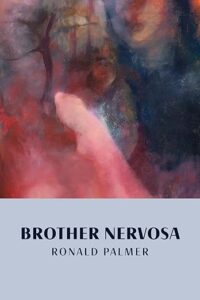
Brother Nervosa, Ron Palmer. Barrow Street Press, 2024. 108 pages. $18.00
by Drew Cushing
Brother Nervosa’s opening poem, “Telekinesis,” begins
When you are lost
this spasm
escapes my hands
and gathers never (overlapping
conversation) with a crowd mulling around the graffitied
wall facing Ocean Beach—
talking about two teenage boys
hauled off by the riptide
The Pacific swallows up the two boys. The surreal wailing of the mothers and the imaginary journey of the boys deep into the water fills the opening stanzas but quickly shifts to the transformation of the environment, the story. The boys become the boy/boyhood of the speaker. The past, still present creating the now of the narrative. All an act of Telekinesis, the psychic ability allowing an individual to influence a physical system without physical interaction. Palmer uses the virus of language to create and deform a physical world full of shadows, tricksters, and trauma.
The opening carnal consumption of the boys by the mother ocean is the opening wave of mutations that take over the book. Membranes/barriers break down. Human. Animal. Screen. Movies. Reality.
This consumptive Telekinesis devours the damaged damsel in the form of the mother. Telling and retelling of his mother’s rape story. For Palmer, even trauma is infectious inside the monologue: it mutates between generations and goes viral, eventually thwarting the speaker’s cathartic fantasy of saving his mother in variation upon variation until she slips into the film Psycho becoming Janet Leigh. Then leaving the film with Janet Leigh’s face. A mask over the rape. The brave face of a murdered woman. A dual truth of shapeshifting boundary crossing trauma that creates something entirely new.
The rehearsing over and over again of traumas big and small play against banal crass commerce of Big Pharma drug sales begetting the next virus. Closeted queries hooking up on the sly, mutating their own virus into a new virus shape shifting natural and supernatural environments. Culminating in the birthing of another boy, the self. The Nervous Brother. Twinned trauma.
Mother you mutate inside me like a virus
The writing, peppered with camp delight and delicious scenes, soars and sinks with fantastic effect. The feverish poetic collision of formalism, narrative, experimentation, surrealism and imagism explodes into a fervent foretelling of a fragile fragmented future. A Derodymus dancing on the delight of vaudevillian ventriloquy possessing and speaking from the mouth of the poem’s puppeted personas.
The book concludes with a final act of consumption:
I binge on a lemon meringue pie in my car
catching my rear view reflection I flinch
with clumps of white cream glistening
On the corners of my repulsive American mouth.
The mirror flashing back to the narrator the sin of consumption. The guilt of the white cream glistening on the corners of my repulsive American mouth―a Bukkake stand-in for the hot load of language Palmer has shot and consumed.
I cannot recommend this book enough. It embodies and unwraps the present moment in exquisitely crafted language. I was instantly transported and could not put this down, devouring in a single thrilling go. And then I had to read it again so I could once more be in this magic fantastical world of gorgeous language and mind bending conceits. Buy it. Read it. Read it again. Buy it for every reader, thinker and dreamer you know. Ronald Palmer is a gift to us all.
Drew Cushing: the bastard son of New Narrative and Language Poetry, Drew’s writing has a delicious way of disturbing others. His writing has appeared in Zyzzyva, Cathay, the Fabulist, Laundry Pen, Dodie Bellamy’s Nars Orgasm Zine, The Marjorie Wood Gallery, Second Floor Projects, 580 Split and other publications. Drew holds an MFA in Creative Writing from San Francisco State and AB in Dramatic Literature from Vassar College. He is a graduate of Trinity Repertory Company and Conservatory where he learned Viewpoints from Anne Bogart